The Change
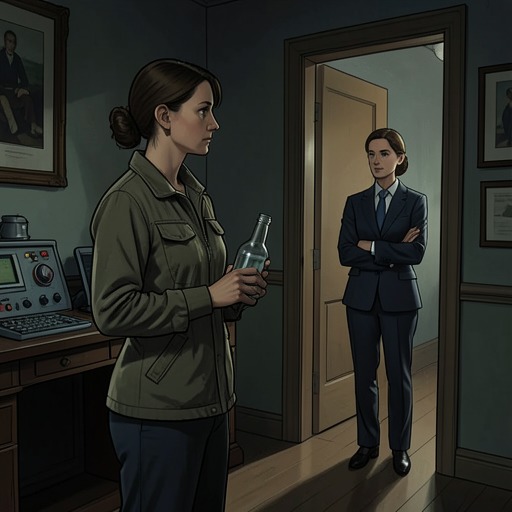
The Other Black GirlThe Change is a far-reaching transformation of Black women that reaches beneath visible changes in speech and dress to affect personality and the self. As its effects spread through workplaces and appear connected to hair grease, the phenomenon makes a central tension concrete: standards of professional acceptability can be more than external rules when they begin to reshape the people expected to meet them.
Definition and Scope
The Change is described as affecting dozens, perhaps hundreds, of young Black women around the world. Its outward signs vary: some women speak differently, while others dress differently. The decisive distinction is that these differences do not remain matters of presentation. The transformation is understood to reach into each woman’s soul, making it a change of identity rather than a simple adjustment of style.
The scale and variation complicate recognition. If the change can look different from one person to another, an altered appearance or manner is not, by itself, proof that a woman has undergone it. The phenomenon’s spread nevertheless raises the stakes: women who might once have seemed distinct from one another can become harder to distinguish, even as the transformation changes them internally.
Workplace Effects and the OBG Threat
Lynn Johnson’s account places the transformation in a longer history. She suspects that Other Black Girls (OBGs), or an earlier form of them, had existed for roughly twenty years. In the past, she believed, they kept to themselves and concentrated on reaching the top position. Their newer ability to blend in with women who were not OBGs changes the danger: concealment helps them increase in number, and people who obstruct their progress can be pushed aside.
That account links transformation to competition within institutions, not simply to a private alteration of character. A warning emerges from the workplace pattern: the pursuit of advancement can turn Black women against other Black women. The concern becomes explicit in the discussion of Lead Conditioners, some of whom end up as the only Black woman left in an office. The problem is described as an unintended consequence of a recent batch of hair grease, rather than its intended purpose. Its maker acknowledges the side effect, apologizes, and says a newer formula has been adjusted to make it less intense. The attempted correction suggests that the product can be calibrated, but also that its social consequences are not wholly under control.
Hair, Conformity, and Representation
The threat of altered identity resonates with Nella Rogers’s earlier experiences of race and professional appearance. Raised in a predominantly white Connecticut neighborhood and educated in predominantly white public schools, she received deliberate encouragement from her parents to take pride in being Black. Yet their efforts could not shield her from the idealization of fine, straight hair that she encountered at school and at home. Her mother’s hair-relaxing practice was one part of the environment in which those standards became visible.
When Nella approaches a Manhattan office job, her anxieties include whether she will fit in with Vera Parini and whether the rigid, homogeneous workplace she has seen in films will prove real. She has worked behind bars and coffee counters, among people in many occupations, and has been free to dress as she likes; she doubts she could have worn a Black Lives Matter shirt to her interview. Elsewhere, she recognizes that Owen, a white cisgender man, cannot share all her experience of publishing or the subtle microaggressions she encounters there. These contrasts establish how institutional belonging can already require unequal calculations before any supernatural transformation is considered.
The dispute over Shartricia shows how Black identity can also be distorted through representation. Nella judges the character in Colin Franklin’s novel as a collection of stereotypes: a young pregnant woman with several children, whose absent partners and addiction-affected family background are used to frame her, while her characterization leaves her isolated and without development. Nella’s assessment is that Shartricia remains trapped in the novel’s assumptions rather than becoming a redeemable, fully realized person. Hazel-May McCall likewise calls the portrayal contrived, caricatured, and offensive. Their criticism matters to The Change’s larger concerns because it distinguishes a person’s complexity from an externally imposed image of Black womanhood. The transformation threatens the self from within; caricature flattens it from outside.
Suspected Causes and Uncertain Evidence
The possibility that The Change can be induced by another person is raised as a suspicion, not established as fact. Kendra Rae Phillips believes that Richard Wagner changed Hazel-May McCall. She connects this theory to Hazel’s later attempt to change her and to Hazel’s avoidance of being seen with her after Kendra spoke out. The claim offers an explanation for Hazel’s conduct, but the evidence presented is Kendra’s interpretation rather than confirmation of Richard’s role.
Other details sharpen the suspicion without resolving it. Richard Wagner says Hazel should also receive an opportunity because she was the person who introduced Jesse Watson to them. When Nella meets Jesse, he appears markedly different from the images and videos she remembers: tidier, with a closely cropped beard, no longer wearing his small twists, and with his hair lying flat and looking greased. The change in appearance invites attention in a story where hair products and transformation are linked, but that scene alone does not establish what happened to him or why.
A recollection of an earlier formula provides a more direct warning about unintended effects. Its intended influence was described as temperamental, yet the person recalling it remembers Kenny as profoundly altered in expression and demeanor. The formula’s maker had promised a limited effect, but neither could know that developing a milder version would take years. Together with the Lead Conditioner discussion, this episode shows repeated attempts to manage a substance whose impact can exceed its stated purpose.
Narrative Significance
The Change connects the novel’s workplace conflicts to a speculative threat: pressure to conform is no longer only a matter of dress, speech, hiring, or advancement, but may become a force capable of altering personality. The transformation also unsettles easy judgments. Changed behavior can resemble adaptation to professional norms, strategic competition, or the influence of a product, while suspicions about who caused it remain uncertain. By setting those possibilities alongside Nella’s concerns about representation, hair, and unequal workplace expectations, the novel makes the struggle over who gets to define Black women’s identities both institutional and intimate.